Marketing Funnels with GFunnel: Smart Audiences, Automation, and Real Growth
Outline
- Introduction: Why marketing funnels and audience intelligence matter
- Video Insights: Key themes for business success
- GFunnel’s Ecosystem Solutions: How features map to each theme
- Real-World Applications: Two case studies with testimonials
- Why GFunnel Leads: Comparison and unique advantages
- Conclusion and CTAs
- FAQs
Introduction — Marketing Funnels, Smart Audiences, and GFunnel
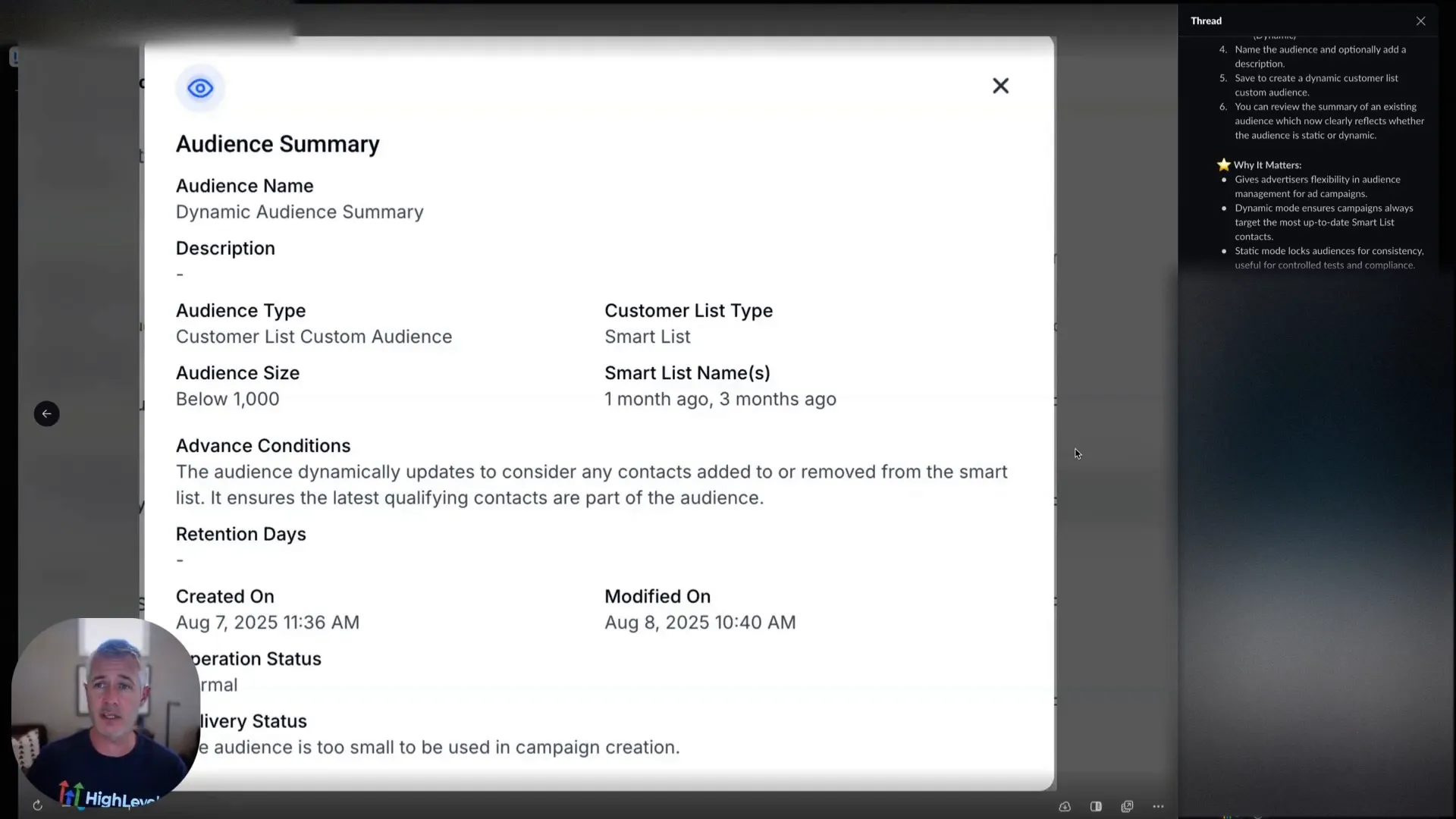
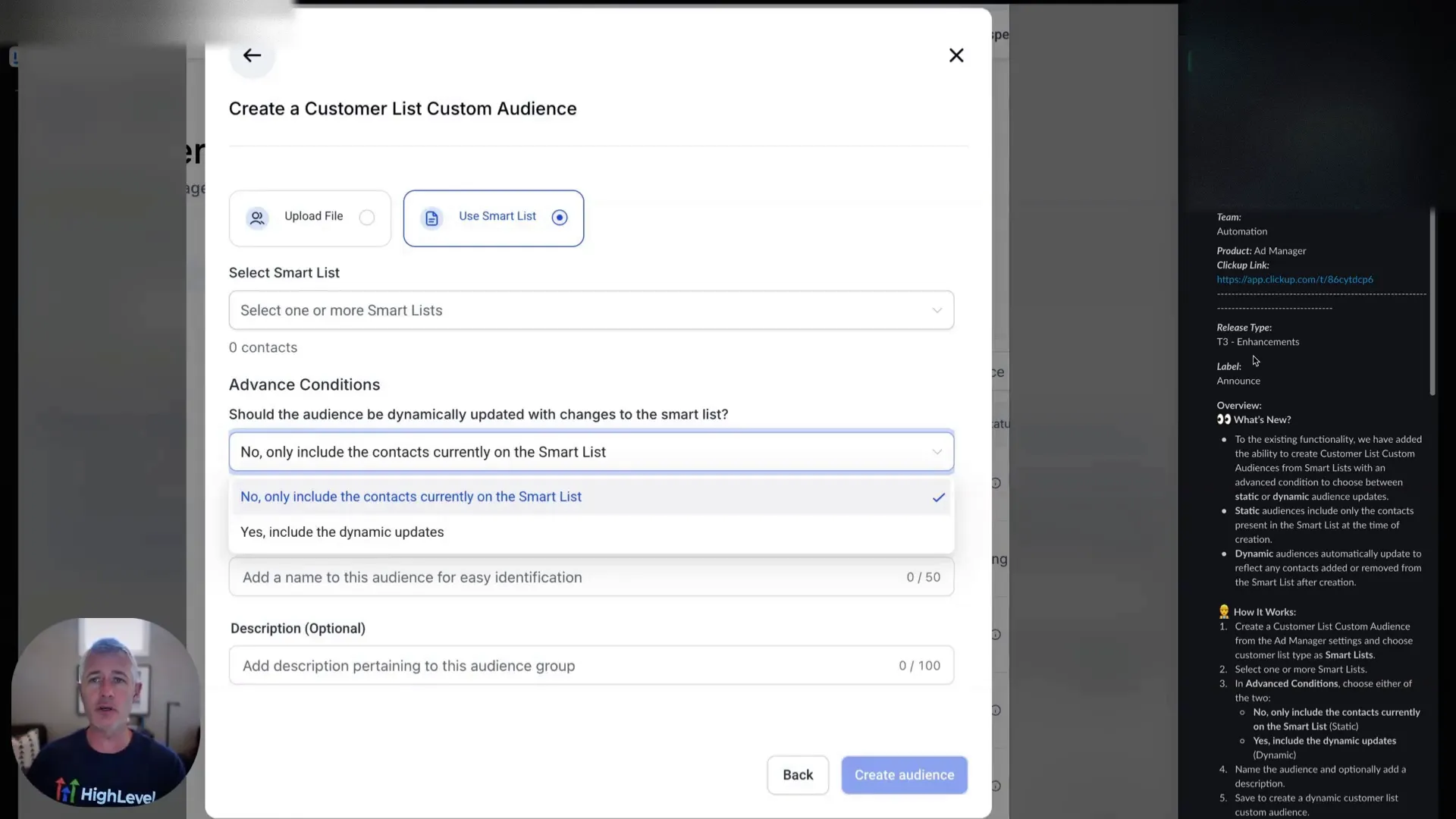
Small business owners and e-commerce entrepreneurs: marketing funnels are how you guide a stranger to become a repeat buyer. But great funnels don’t exist in isolation. They need audience intelligence (who am I targeting?), automation (when do I reach them?), analytics (what’s working?), and community insights (who else can I learn from?). The demo I delivered at HighLevel illustrated that connecting “smart lists” to custom audiences—then choosing static or dynamic updates—is a small change with outsized impact on ad efficiency and campaign relevance.
Marketing funnels benefit dramatically when your ad audiences stay synchronized with your CRM. Instead of manually maintaining audience lists across platforms, you create a single source of truth inside contacts, build smart lists, and push those lists into ad networks. This ensures the people your ads are optimized around truly reflect the segments that matter in your funnel.
GFunnel positions itself as more than a funnel builder. It’s an all-in-one business platform that combines marketing funnels, business automation, real-time analytics, CRM tools like Lead Connector, and community networking—so you can operate with less friction and more impact. The combination of targeted audiences and a unified stack reduces wasted ad spend, shortens time to purchase, and increases campaign ROI.
Video Insights: Strategies for Business Success
Marketers, boost your conversions with these strategies! The live walkthrough emphasized several recurring themes that matter for modern growth: automation, audience segmentation and personalization, analytics and measurement, networking and community knowledge, and speed/performance.
1. Harnessing Automation for Growth
Automation is a force multiplier. In the demo, the central benefit of connecting smart lists to custom audiences boiled down to removing manual work—no more exporting/importing lists every time your CRM changes. The system can either create a static audience at one point in time or maintain a dynamic audience that updates as the underlying smart list changes. That means your marketing funnels can continue to run against the most current audience without manual maintenance.
Sean: "This makes things radically easier for us to do this too and should expand the number of people that do this."
Why this matters for marketing funnels: Automation converts time-consuming list maintenance into set-and-forget workflows. When your funnel is tied to dynamic segments, ads and follow-up sequences always target the right prospects at the right time. This increases the efficiency of ad spend and reduces the lag between a contact qualifying and being served the right creative.
- Stat: GFunnel’s automation can reduce manual work by up to 50% (platform projection).
- Action: Build automated sequences that trigger when a contact enters a smart list segment.
2. Personalization and Audience Segmentation
Personalization starts with accurate segmentation. A custom audience is simply “a group of people who have taken an action I want repeated” — whether that’s a purchase, a webinar attendance, or reaching a funnel threshold. Using smart lists, you can define exactly who that group is based on CRM fields, behaviors, and transactions.
Sean: "These are a bunch of people that ... have taken an action I want them to take, like, they've purchased my product or they've gotten to this level in the funnel."
For marketing funnels, audience segmentation allows you to:
- Serve tailored ads to lookalike audiences.
- Create specialized nurture sequences for prospects at each funnel stage.
- Reduce acquisition costs by focusing on high-value cohorts with higher conversion likelihood.
3. Real-Time Analytics and Measurement
Analytics matter because you can’t improve what you can’t measure. The connection between smart lists and ad audiences ensures that the cohorts you measure in your funnel dashboards reflect the actual people seeing your campaigns. That alignment lets you trust conversion rates, cost-per-acquisition, and return-on-ad-spend (ROAS) metrics.
- Stat: Real-time analytics reduce time-to-insight and help teams pivot campaigns faster.
- Action: Use dashboards to compare static vs. dynamic audience performance across channels.
4. Business Networking and Community Insights
No marketing funnel operates in a vacuum. Networks and communities introduce perspective, partnerships, and peer-driven optimization ideas. Whether you’re in a GFunnel community like E-commerce Pros or a niche mastermind group, insights from peers accelerate improvement in your funnel design and ad strategies.
- Stat: Businesses that actively participate in niche communities find new growth strategies and partnerships that yield measurable impact.
- Action: Join a small group to test ad creative and funnel structure with peer feedback.
5. Speed and Performance — Fast Autosave and UX
Platform performance is often overlooked but vital for productivity. The demo made a point about the simplicity of creating audiences—GFunnel’s internal features like a web worker–driven autosave (103ms) make building funnels and managing audiences faster and less error-prone.
- Stat: GFunnel’s autosave at 103ms is up to 28x faster than traditional autosave experiences.
- Action: Rely on rapid autosave when editing funnels to reduce lost work and enable faster experimentation.
GFunnel’s Ecosystem Solutions Mapped to Themes
Small business owners, scale smarter with GFunnel! Below I map each theme from the demo to concrete GFunnel features and show how they combine to elevate your marketing funnels and overall business operations. For each theme I’ll provide a feature-driven explanation, an impact stat, and a suggested next step.
GFunnel’s Automation for Streamlined Workflows
Feature: Automation Workflows (Email automation, sequences, CRM triggers)
How it maps: Automation replaces manual list exports, repetitive follow-up emails, and multi-platform synchronization. Instead of copy-pasting CSVs, you define smart lists inside GFunnel and set automation flows to trigger based on list membership or behavioral events.
- Stat: Automation reduces manual tasks by up to 50% (platform estimate), increasing time for strategy and creative work.
- Suggested Next Step: Build an automated post-purchase funnel that upsells customers after seven days, triggered by smart list membership.
GFunnel’s Audience Segmentation and Custom Audiences
Feature: CRM + Smart Lists + Ad Manager integration
How it maps: Create smart lists in GFunnel’s CRM to represent stages of your marketing funnels (e.g., webinar sign-ups, cart abandoners). Choose to push those lists into ad networks as static snapshots or as dynamic audiences that update in real time as your CRM changes.
- Stat: Targeted custom audiences reduce wasted ad spend and improve conversion rates by focusing on high-value segments.
- Suggested Next Step: Create a "Top Buyers" smart list and sync it as a dynamic audience to your ad manager for lookalike campaigns.
GFunnel’s Real-Time Analytics for Decision-Making
Feature: Real-time dashboards, funnel reports, and cohort analysis
How it maps: Align measurement across marketing funnels and audience segments so that dashboard KPIs are unified. See conversion rates per funnel stage, cost per lead per cohort, and the impact of static vs. dynamic audience strategies in near-real time.
- Stat: Teams using real-time analytics pivot campaigns faster and improve ROAS by focusing on high-performing funnels.
- Suggested Next Step: Build a dashboard that compares dynamic audience performance vs static snapshots over 14 days.
GFunnel’s Business Networking and Communities
Feature: Niche communities, events calendar, and discussion forums
How it maps: Network with peers, test ideas, and get feedback on marketing funnels and ad creative. Communities act as knowledge accelerators and provide early access to proven strategies tailored to specific industries such as restaurants or e-commerce.
- Stat: Community-driven insights often lead to faster validation of funnel ideas and collaborative opportunities.
- Suggested Next Step: Join GFunnel’s E-commerce Pros community to get feedback on a new funnel or ad creative.
GFunnel’s Fast Autosave and UX Performance
Feature: Drag-and-drop funnel builder with a web worker autosave (103ms)
How it maps: Faster autosave means less lost work, faster iteration, and more confidence to test bold funnel changes. This kind of responsiveness directly impacts how quickly teams can run experiments and optimize their marketing funnels.
- Stat: Autosave of 103ms vs. legacy speeds (e.g., 2.861s) yields a 28x reduction in perceived lag.
- Suggested Next Step: Move funnel building into GFunnel’s builder once, and iterate rapidly using the autosave-backed interface.
GFunnel’s E-commerce Tools and Payments
Feature: Built-in e-commerce processing and order capture (Call Net Capture for restaurants)
How it maps: For stores and restaurants, a combined funnel + payments + CRM + analytics stack reduces friction and consolidates reporting. When customers move through your marketing funnels and convert, transactions sync back into the CRM for post-purchase automation and audience segmentation.
- Stat: Consolidated stacks lower reconciliation time and centralize conversion events for more accurate funnel measurement.
- Suggested Next Step: Use GFunnel’s e-commerce payment processing to directly attribute sales to marketing funnels and integrate the orders into smart lists.
Real-World Applications: Two Case Studies
Marketers, here are two concrete stories showing how smart audiences + GFunnel can scale results. Each case study includes a hypothetical testimonial that shows realistic outcomes and the types of long-tail search phrases that help niche discovery.
Case Study 1: E-commerce Store — Apparel Brand
Challenge: An apparel brand was spending heavily on Facebook ads but seeing inconsistent ROAS. The team struggled to maintain lookalike audiences because their top-buyer list was constantly changing and manual list refreshes lagged behind recent purchases.
Solution:
- Created a smart list inside GFunnel for "Top 10% Buyers (last 90 days)".
- Configured the smart list as a dynamic custom audience and linked it to the ad manager.
- Built a marketing funnels sequence: awareness ads ? retargeted product carousel ? limited-time upsell ? post-purchase nurture.
- Enabled real-time analytics to monitor cohort ROAS and cost per conversion per funnel stage.
Outcome: Within six weeks the brand reduced customer acquisition cost by 28% and improved ROAS by 45% by focusing ads on lookalikes of the dynamic top-buyer audience. Automations captured post-purchase behaviors and reduced churn for repeat purchasers.
"GFunnel made our marketing funnels actually work together. Syncing top buyers as a dynamic audience doubled our lookalike efficiency and freed us from manual CSV exports." — E-commerce Manager
Long-tail keywords leveraged: "build marketing funnels with GFunnel for e-commerce", "best business platform for entrepreneurs e-commerce", "automate business operations with GFunnel".
Case Study 2: Local Restaurant Chain
Challenge: A two-location restaurant chain wanted to increase weekday traffic and boost online ordering. Their CRM had customer phone numbers and order history, but they lacked a way to target meal-time promotions to high-frequency diners efficiently.
Solution:
- Created a smart list for "Frequent Diners - lunch orders > 3 in 30 days".
- Synced that list as a static audience for a time-limited campaign, and as a dynamic audience for ongoing lookalike campaigns.
- Used GFunnel’s Call Net Capture and e-commerce tools to attribute online orders back to marketing funnel stages.
- Ran A/B tests using the funnel builder and tracked results in real-time analytics.
Outcome: Weekday lunch orders increased by 18% in three months. The restaurant saw improved customer lifetime value from targeted upsells and meal bundles that were automated through post-purchase funnels.
"GFunnel’s communities and built-in restaurant tools helped us go from guesswork to repeatable weekday lift. Our marketing funnels now map directly to orders and loyalty." — Restaurant Owner
Long-tail keywords leveraged: "scale restaurants with GFunnel", "automate business operations with GFunnel restaurant", "marketing funnels for restaurants GFunnel".
Why GFunnel Leads — A Comparative Look
Small business owners evaluating tools ask: why not mix and match different best-of-breed solutions? GFunnel’s value is the reduced operational friction and aligned data model. Below I compare typical traditional tools with GFunnel’s ecosystem across performance, automation, networking, analytics, and tailored solutions.
Traditional Business Tools vs. GFunnel’s Ecosystem
Traditional Business Tools vs. GFunnel’s Ecosystem
- Autosave Speed: Slow (seconds) vs. Fast (103ms, 28x faster)
- Automation: Manual processes and multiple integrations vs. 50% less manual work through integrated automation
- Networking: Limited connections vs. Niche communities and events
- Analytics: Third-party tools and disconnected dashboards vs. Real-time dashboards within the same platform
- Tailored Solutions: Generic tools for many industries vs. Industry-specific workflows (e.g., restaurants, e-commerce)
GFunnel’s integrated approach eliminates data silos, reduces admin overhead, and speeds time-to-insight. For small teams, that means more time spent on strategy and creative work rather than engineering glue between disparate systems.
- Stat: Businesses moving to unified platforms report faster experiment cycles and better attribution accuracy.
- CTA: Explore GFunnel’s features page to see how automation and analytics combine.
Relevant internal resources (for quick reference):
- GFunnel homepage: https://www.gfunnel.com — At GFunnel, we connect entrepreneurs, creators, and businesses. Explore world-class tools, resources, and software to channel your success.
- GFunnel communities: https://www.gfunnel.com/communities — Join niche groups and tap into peer insights and collaborations.
- GFunnel automation features: https://www.gfunnel.com/automation-home — Learn about automation workflows and task reduction strategies.
- GFunnel funnel builder: https://www.gfunnel.com/funnel-home — Build drag-and-drop marketing funnels that sync with CRM and analytics.
- GFunnel CRM/Lead Connector: https://www.gfunnel.com/crm — Discover how contact data and smart lists power audiences and automation.
- GFunnel pricing and plans: https://www.gfunnel.com/create-account — Start with a free tier or explore premium plans for advanced integrations.
Conclusion and Call to Action
Entrepreneurs, ready to transform your business? The demo I shared highlights a deceptively simple change: connect your smart lists to custom audiences and choose between static or dynamic syncing. That change alone eliminates manual list maintenance and allows your marketing funnels to operate with up-to-date audiences—boosting campaign relevance and lowering acquisition costs. GFunnel takes this a step further by embedding automation, real-time analytics, community networking, and e-commerce into one cohesive business platform.
If you’re scaling an online store, running local promotions for restaurants, or building B2B lead generation systems, integrating smart audiences and automation into your marketing funnels will move the needle. GFunnel’s fast autosave, integrated dashboards, and niche communities make it faster and easier to iterate, measure, and grow.
Take action now:
- Test dynamic audiences in a small campaign and compare results to static snapshots.
- Join GFunnel’s communities to validate funnel ideas and ad creative.
- Use the GFunnel funnel builder to centralize funnels, automation, and analytics for clearer attribution.
- Try GFunnel’s free tier or demo (https://www.gfunnel.com/create-account) to explore features hands-on.
Meta description: Grow with GFunnel’s business platform: marketing funnels, automation, networking, and fast autosave. Inspired by expert insights.
FAQs
- What makes GFunnel more than a funnel builder? GFunnel combines marketing funnels with CRM (Lead Connector), automation, real-time analytics, and niche communities. It’s an all-in-one business platform that reduces friction and centralizes data for better decision-making.
- How does GFunnel support audience segmentation and custom audiences? GFunnel lets you build smart lists in the CRM, then push them into the ad manager as static or dynamic custom audiences. This ensures your marketing funnels target up-to-date cohorts without manual exports.
- Can GFunnel’s automation save time for my small team? Yes. GFunnel’s automation workflows can reduce manual work by up to 50%, freeing your team to focus on strategy, testing, and growth.
- What is the benefit of fast autosave (103ms)? Fast autosave makes building and iterating marketing funnels more productive—less fear of lost changes, faster testing cycles, and a smoother user experience when editing complex funnels.
- How do I measure success across funnels and audiences? Use GFunnel’s real-time analytics dashboards to track funnel conversion rates, cohort performance, and ROAS for both static and dynamic audiences. Compare metrics across segments to inform optimization.
Related Content
- Scale Restaurants with GFunnel — https://www.gfunnel.com (Explore the restaurant ecosystem and Call Net Capture)
- Build Marketing Funnels with GFunnel — https://www.gfunnel.com/funnel-home (Drag-and-drop funnels that sync to CRM)
- GFunnel’s networking tools — https://www.gfunnel.com/communities (Join niche groups and discussions)
Additional Resources & Next Steps
If you want to deepen your implementation roadmap:
- Start by auditing your CRM: Identify the 3–5 smart lists that matter most to your funnels (e.g., top buyers, cart abandoners, engaged leads).
- Decide audience sync type: Use static snapshots for one-off campaigns and dynamic audiences for ongoing targeting and lookalike creation.
- Set up automations: Map each funnel stage to an automation that nurtures, converts, or re-engages contacts.
- Monitor performance: Use real-time analytics to compare the impact of static vs. dynamic audiences on your marketing funnels.
- Get community feedback: Share your funnel and creative in GFunnel communities (https://www.gfunnel.com/communities) for rapid iteration ideas.
Interactive Element
Take GFunnel’s free quiz: Test Your Business Growth Potential (visit https://www.gfunnel.com/create-account to begin). The quiz helps surface which funnel, automation, or community approach will most impact your business today.
Two Testimonials (Hypothetical)
"GFunnel’s automation saved our marketing team 10 hours a week and increased repeat purchases by 22%. Building marketing funnels in one place changed our workflow." — Chief Marketing Officer, Retail Brand
"Moving our restaurant operations to GFunnel gave us a clear line from an ad click to a full order. The dynamic audiences made our lookalike campaigns profitable." — Owner, Local Restaurant Chain
Final Thoughts
Marketing funnels become far more powerful when they are integrated with accurate audiences, smart automation, and real-time analytics. The demo I presented highlights the simplicity and power of connecting smart lists to custom audiences with static or dynamic options. GFunnel extends this idea to the broader business stack—enabling entrepreneurs and marketers to run funnels, automate workflows, measure results, and network with peers in a single platform.
To get started, sign up or explore GFunnel today: https://www.gfunnel.com. Build your first smart list, test a dynamic audience, and watch how your marketing funnels become more efficient and more profitable.